

A body-aware guide to sun protection for sensitive skin, including wearable SPF, UPF clothing, shade, heat-aware planning, barrier support, and gentle after-exposure recovery.
This July at Bloom, one question has guided us: how do we enjoy summer without pushing our sensitive skin and sensitive bodies into recovery mode?
Sun protection for sensitive skin is not only about avoiding a burn. It is about protecting the skin barrier, reducing environmental stress, and supporting a body that may already be managing heat sensitivity, fatigue, inflammation, medication sensitivity, sensory sensitivity, chronic illness, or nervous-system overload.
This is where Bloom’s July theme, Protect What Protects You, becomes practical. For many of us, the goal is not to avoid the sun completely. The goal is to enjoy time outside without having to pay for it later through flares, pain, inflammation, exhaustion, or a skin barrier that feels pushed past its limit.
SPF matters, but SPF is not the whole protection system. Sensitive skin often needs more than one product step. Sensitive bodies may need more than one kind of support: shade, timing, breathable layers, UPF clothing, cooling rituals, gentle cleansing, hydration, barrier support, and recovery that does not punish the skin for reacting.
This Skin School lesson is about learning how to protect your skin and body before they are forced into recovery.
In this article, we’ll look at sun protection through a sensitive-skin and sensitive-body lens: how to protect, cleanse, replenish, support, and recover with more care.
Sensitive Skin Often Belongs to a Sensitive Body
Sensitive skin does not always exist in isolation.
For many of us, sensitive skin is one part of a larger sensitivity picture. In a worldwide survey of 10,743 adults, people who identified as having sensitive skin also reported more fatigue, sweating, and sleep disruption than those who did not. That does not mean sensitive skin causes those experiences, but it supports looking at sensitivity within a wider context.
SOURCE: Misery et al. (2021) — sensitive skin in association with fatigue, sweating, and sleep disruption.
Sensitive skin is still personal. Not every person with sensitive skin has the same body, the same triggers, or the same needs. But our beauty rituals can become more supportive when we stop treating the skin as separate from the body.
In summer, those demands can stack. Hot weather can place additional strain on people living with certain chronic conditions, while some medications can make the skin more sensitive to sunlight. Humidity, sweat, sunscreen, outdoor time, social energy, travel, and disrupted routines may add to the total load.
SOURCES: CDC (2024) — heat and certain chronic conditions; FDA (2024) — medication-related photosensitivity.
This is the foundation of body-aware beauty: a sensitive-skin ritual is not only about finding the right cleanser, serum, or SPF. It is about planning for sensitivity before exposure becomes a recovery problem.
That means asking proactive protection questions:
- What does my skin need before sun, heat, humidity, sweat, or SPF?
- What does my body need before outdoor time so I am not pushing past my limits?
- What supports my skin barrier before it becomes reactive?
- What helps me stay cool, covered, hydrated, and regulated while I am outside?
- What recovery steps can I prepare ahead of time so I am not scrambling after a flare, pain, inflammation, or exhaustion begins?
Sun protection belongs in that conversation.
For sensitive skin and sensitive bodies, protection is not one step. It is a layered support system. SPF helps protect exposed skin. Hats, shade, and breathable, sun-protective clothing add layers of protection while helping limit friction and heat buildup. Cooling rituals help the body regulate before depletion sets in. Gentle cleansing removes sweat and sunscreen without punishing the barrier. Hydration, barrier support, and recovery steps help the skin and body return to steadiness.
The goal is not to wait until the skin reacts or the body crashes. The goal is to support both early enough that recovery does not become the only option.
This is why Bloom’s July theme is not simply “wear sunscreen.” It is Protect What Protects You.
Because the skin barrier protects you. Your energy protects you. Your nervous system protects you. Your rituals protect the rhythm that lets you move through the world with more steadiness.
Protection, in this context, is not avoidance. It is participation with support.
It is care that helps you enjoy the season without abandoning the body that carries you through it.
The Skin Barrier Is a Protector
The skin barrier can be described as the body’s outer shield. For sensitive skin, that shield can feel easier to disrupt and harder to calm once it has been pushed too far. This is why sun protection for sensitive skin isn’t only about preventing a visible burn. It is also about respecting the barrier that helps the skin hold moisture, tolerate the environment, and return to steadiness after exposure.
A simple way to understand the skin barrier is the brick wall metaphor: the skin cells are the bricks, and the lipids between them act like mortar, helping hold the structure together so the skin can better protect what is underneath.
When that structure is supported, skin can feel more comfortable, more resilient, and less easily overwhelmed by everyday stressors. When it is disrupted, the skin may feel tight, dry, flushed, reactive, stinging, itchy, or easier to irritate. A disrupted barrier can also leave the skin more vulnerable to moisture loss, irritation, and environmental stress.
SOURCE: Rajkumar et al. (2023) — skin-barrier structure, moisture loss, and moisturization.
That matters in summer because UV exposure, heat, humidity, sweat, friction, SPF, makeup, reapplication, and cleansing can all ask more from the skin barrier. Even when each individual step seems small, the total load can matter — especially for skin that already reacts easily.
UV exposure can contribute to oxidative stress in the skin, while heat, sweat, friction, and repeated cleansing can make sensitive skin feel more depleted or reactive. A strong barrier does not make the skin invincible, but a supported barrier may help the skin move through those stressors with more steadiness.
This is why barrier care belongs inside the sun-protection conversation — not as a replacement for SPF, but as the foundation that helps sensitive skin move through SPF, sun, sweat, cleansing, and recovery with less strain.
A body-aware beauty ritual does not wait until the barrier feels angry to begin caring for it. It asks what the skin needs before exposure, during exposure, and after exposure so the barrier is not left carrying the entire burden alone.
For Bloom, this is where protection becomes more than a product step. It becomes a rhythm: protect exposed skin, reduce unnecessary stress, cleanse without stripping, replenish what the skin loses, and support the barrier before it must ask loudly.
Because when the skin barrier protects you, protecting the barrier becomes part of caring for the whole body.
UV Protection Is More Than Avoiding a Burn
When people talk about sun protection or UV protection, the conversation often starts with sunburn. That matters. But for sensitive skin and sensitive bodies, the conversation cannot stop there.
UV protection is also about the total experience of being outside: sunlight, heat, humidity, sweat, sunscreen, clothing, reapplication, friction, dehydration, sensory input, and the amount of energy the body has to spend staying regulated.
For some people, a sunny day is simple. For others, especially those managing sensitive skin, heat sensitivity, chronic conditions, inflammation, fatigue, medication sensitivity, or sensory overwhelm, outdoor time can come with a cost if the body is not supported before, during, and after exposure.
That doesn’t mean summer has to become smaller. It means the protection plan needs to become more complete.
A burn is one obvious sign that the skin has been pushed too far, but it is not the only way sensitive skin may communicate stress. Sensitive skin may also respond with burning or stinging, itching, tightness, dryness, irritation, or visible redness. Heat stress may show up as heavy sweating, weakness or fatigue, dizziness, headache, nausea, muscle cramps, or an elevated body temperature. For a body already managing pain, inflammation, or limited energy, the total experience may also feel depleting or require more recovery.
SOURCES: Chen et al. (2023) — sensitive-skin symptoms and environmental triggers; CDC (2026) — symptoms of overheating and heat-related illness.
This is why the Bloom approach to sun protection is not simply “apply SPF and go.” SPF matters. It helps protect exposed skin. But SPF doesn’t create shade, cool the body, reduce friction from clothing, choose the time of day you go outside, cleanse sweat and sunscreen afterward, or replenish hydration once the day is over.
That’s not a weakness of SPF. It is a reminder that SPF has a specific job. The rest of the protection system has its own work to do.
For sensitive skin and sensitive bodies, UV protection becomes more supportive when it includes the whole rhythm of exposure:
- Before: SPF, shade planning, breathable layers, hats, UPF clothing, water, timing, and knowing your body’s limits.
- During: reapplication, cooling breaks, shade, hydration, pacing, and noticing when the body is asking for less.
- After: gentle cleansing, replenishing hydration, barrier support, rest, and recovery steps that soothe instead of correct.
Sources for before/during protection: National Cancer Institute (2025) — layered sun protection, including sunscreen, timely reapplication, shade, and protective clothing; Skin Cancer Foundation (2025) — UPF clothing; CDC (2026) — hydration, shade, cooling breaks, and heat safety
Barrier-care basis for after-exposure support: Rajkumar et al. (2023) and Chen et al. (2023), previously cited in Section 2.
This is the shift: sun protection is not only about what you apply before you leave the house. It’s about how you help your skin and body move through the full experience of being outside.
The goal isn’t to avoid summer.
The goal is to enjoy summer without paying for it later.
Your Before, During + After Sun-Protection Rhythm
Sun protection works best as a layered rhythm—not a single step.
Before
- Apply SPF.
- Plan shade and timing.
- Choose breathable or UPF layers.
- Bring water and know your limits.
During
- Reapply SPF as directed.
- Take shade and cooling breaks.
- Hydrate and pace yourself.
- Notice when your body is asking for less.
After
- Cleanse gently.
- Replenish hydration.
- Support the skin barrier.
- Rest and let recovery be soft.
Protection begins before exposure and continues until the skin and body feel steady again.
Wearable Sun Protection for Sensitive Skin
Choosing SPF for sensitive skin is not only about finding the highest number on the bottle. Protection matters, but so does whether the sunscreen feels realistic to wear on an actual day.
For sensitive skin, an SPF can look perfect on paper and still be difficult in practice. It might sting around the eyes, feel heavy in humidity, pill under makeup, leave the skin feeling tight, trigger flushing, cause redness, lead to breakouts, or create irritation, bumps, itching, or a rash-like reaction. That matters because sunscreen only helps when it can become part of a routine you can repeat.
SOURCES: Mahajan et al. (2024) — sunscreen-related stinging, acne, and contact or photoallergic reactions; Weig et al. (2020) — sunscreen feel and appearance as barriers to use.
Wearability is not vanity. For sensitive skin, wearability is part of consistency. Reactivity matters too.
When I test SPF at Bloom, I’m not only asking whether it applies smoothly. I’m watching how my skin responds over time: whether my cheeks look redder, whether I notice breakouts, bumps, itching, stinging, or irritation, whether the product creates new texture, and whether my skin still feels calm after wearing it for a few hours.
Those questions matter because sensitive skin can give feedback quickly. Sometimes the feedback is obvious: burning, stinging, flushing, or a rash-like response. Sometimes it is quieter: congestion, roughness, tightness, new texture, or the feeling that the skin is less comfortable than it was before.
This is why I pay attention to more than the SPF number when I test a sunscreen. I want to know how it feels over skincare, how it layers under makeup, how it behaves in heat and humidity, whether it causes visible reactivity, and whether my skin still feels comfortable after wearing it for a few hours.
Disclosure: Some links in this article are affiliate links. If you make a purchase through one of these links, Bloom may earn a commission at no additional cost to you.
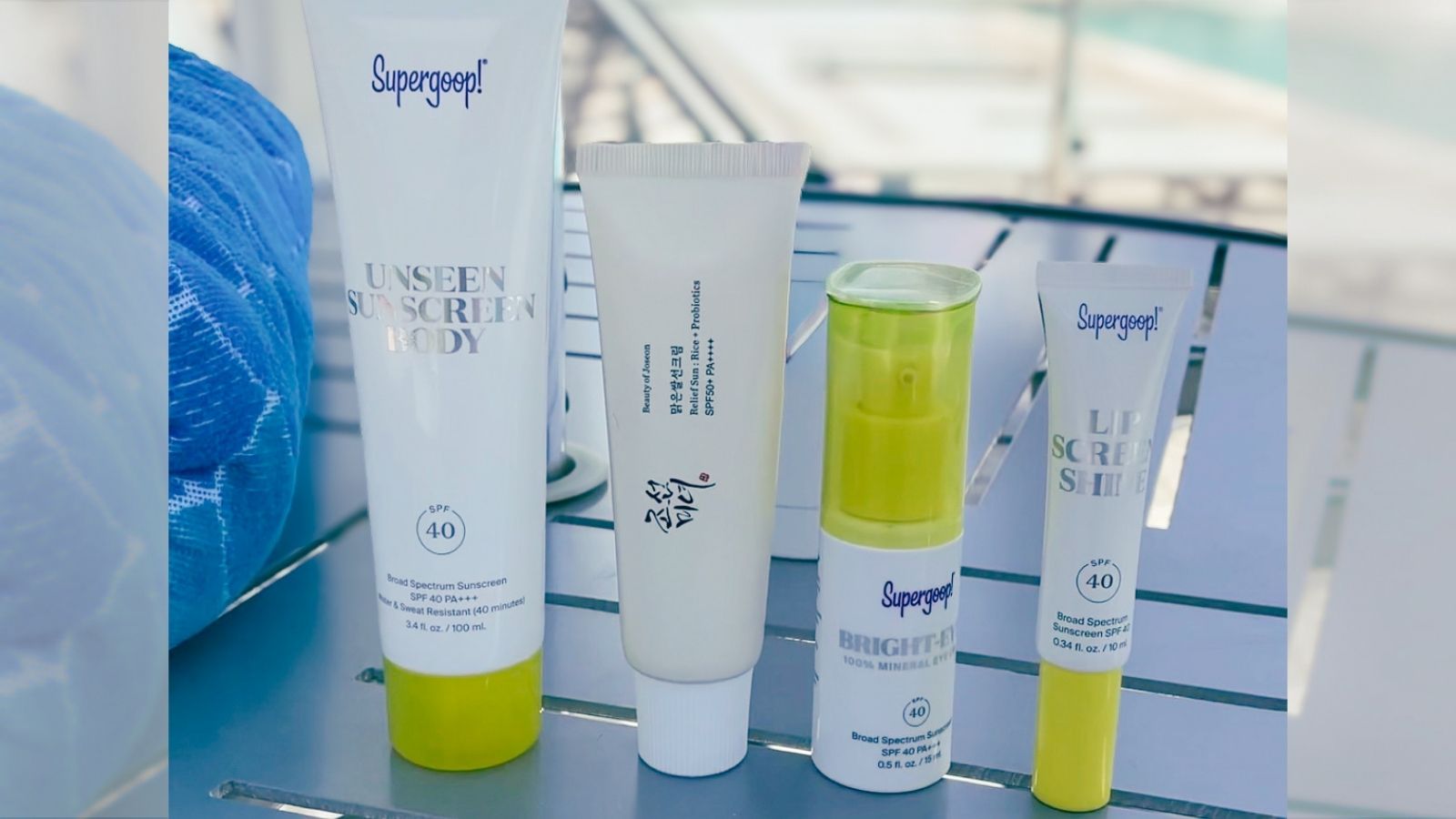
I also look for supportive benefits. Some sunscreens are simply sunscreen, and that can be enough. But some formulas include skin-supportive ingredients that may help the product feel more comfortable or nourishing in a daily ritual. Beauty of Joseon Relief Sun: Rice + Probiotics SPF 50+, for example, is formulated with rice extract and fermented grain extracts, which makes it interesting to me as a sensitive-skin testing-shelf product. I’m not only looking at UV protection. I’m also watching how it wears, how it feels, and whether my skin looks smoother, more hydrated, more even, or more comfortable while using it.
That does not mean skincare ingredients replace SPF performance. They do not. It means the full formula experience matters.
For sensitive skin, a sunscreen earns trust through more than one test. It has to protect exposed skin, feel wearable, avoid obvious reactivity, layer well with the rest of the routine, and make reapplication feel possible instead of overwhelming.
Reapplication is part of sun protection, but for sensitive skin, adding more product throughout the day can sometimes feel like adding more weight to skin that is already managing heat, sweat, humidity, and exposure. That does not mean reapplication doesn't matter. It means the product has to feel wearable enough that reapplication is not something the skin dreads.
SOURCE: FDA (2026) — sunscreen protection, application, and reapplication guidance.
A good sensitive-skin SPF does not have to be glamorous. It has to be usable. It has to feel like something the skin can tolerate, the body can move through, and the person can reach for again with trust.
That is the lens I bring to SPF testing at Bloom: not perfection, but wearability, reactivity, comfort, layering, skin-supportive benefits, consistency, and trust over time.
A sunscreen earns its place when it supports the ritual without making sensitive skin feel punished for needing protection. This is where product notes can be useful, but they are not the whole story. A face SPF from the testing shelf, a body SPF that layers well, or a formula that feels comfortable in Florida humidity becomes part of the conversation because it answers a practical question:
Can I live with this on my skin?
For sensitive skin, that question matters. Because the best SPF is not only the one you buy. It is the one you can actually wear.
UPF Clothing + Soft Living: Protection as a Lifestyle
If SPF is the product layer, UPF and soft living are part of the lifestyle layer. SPF is what we apply to exposed skin. UPF, shade, timing, breathable clothing, cooling rituals, and pacing are part of how we shape the conditions around the skin and body.
That distinction matters because sensitive skin may respond to sun exposure, shifts in temperature and humidity, and products applied to the skin. A sensitive body may also be navigating sweat, friction, dehydration, sensory input, overstimulation, and the energy it takes to stay regulated in an environment that asks too much for too long.
SOURCE: Chen et al. (2023) — environmental and product-related triggers of sensitive-skin symptoms.
This is where protection becomes more than a skincare step. It becomes a way of listening.
A wide-brimmed hat can reduce UV exposure to the scalp, face, ears, and neck. A lightweight, sun-protective cover-up can protect the skin without requiring another layer of product. Breathable UPF clothing can reduce direct UV exposure, while shade, cooler timing, hydration, and cooling breaks can help reduce heat strain. Together, those choices can give the skin and body more room before the day starts feeling too loud.
SOURCES: National Cancer Institute (2025) — hats, shade, protective clothing, and layered sun protection; Skin Cancer Foundation (2025) — UPF clothing and breathable UPF fabrics; CDC (2026) — hydration, shade, cooling breaks, and cooler outdoor timing.
For sensitive skin and sensitive bodies, these choices are not excessive. They are lifestyle choices that can reduce the conditions that contribute to reactivity. They are small ways of responding before the sirens go off.
Many of us have been taught to ignore early cues. We wait until the flushing is obvious, the skin feels angry, the body is overheated, the headache starts, the fatigue hits, the dizziness shows up, or recovery is already in motion. But body-aware beauty asks us to listen earlier: when the skin starts to feel tight, when the face feels warmer than usual, when the clothing starts to feel irritating, when the sun feels too sharp, when the body starts asking for shade, when the outing starts costing more energy than expected, or when “I’m fine” is starting to mean “I’m overriding myself.”
This is the soft-living layer of sun protection: noticing what the skin and body need before the day tips into recovery.
Sometimes protection looks like sunscreen. Sometimes it looks like choosing the shaded table, bringing the hat even if no one else does, wearing the breathable layer instead of dressing for the photo, drinking water before you feel depleted, stepping inside before your body has to beg for relief, or leaving while the day still feels good.
This is protection as a lifestyle: not fear, not avoidance, not overthinking, but a rhythm of choices that help sensitive skin and sensitive bodies stay more comfortable, more regulated, and less reactive.
For Bloom, UPF, hats, shade, breathable fabrics, timing, cooling rituals, and pacing belong in the same conversation as SPF because they are all part of the same question:
How can I protect what protects me before recovery becomes the only option?
Protection does not have to make summer smaller. It can make participation more supported.
The After-Exposure Ritual: Cleanse, Replenish, Recover
Sun protection for sensitive skin doesn't end when you come back inside. For sensitive skin and sensitive bodies, what happens after exposure matters too.
After a day of SPF, sweat, humidity, heat, friction, makeup, reapplication, outdoor air, and environmental buildup, the skin may be asking for something very different than an aggressive reset. It may not need to be corrected. It may need to be supported.
This is where the after-exposure ritual begins: not with stripping, scrubbing, or exfoliating the skin into submission, but with cleansing that prioritizes comfort and barrier support.
Gentle Cleansing After Sun Protection for Sensitive Skin
After SPF, sweat, and outdoor exposure, sensitive skin may benefit from removing what needs to come off without adding more friction. Removal needs vary with the formula. In one small study, both a foaming cleanser and cleansing oil removed non-water-resistant sunscreen, while cleansing oil was more effective for water-resistant sunscreen. If one cleanse is enough, the ritual can stop there. If an oil cleanser leaves residue, a mild second cleanse may be added—only when the skin tolerates it.
For sensitive skin, cleansing after SPF is not only about getting clean. It is about removing what the day left behind without turning cleansing into another source of friction.
SOURCES: Chen et al. (2020) — cleanser and cleansing-oil removal of sunscreen, with cleansing oil performing best for water-resistant sunscreen; American Academy of Dermatology (2026) — gentle cleansing, avoiding scrubbing, and cleansing after sweating
That matters because friction is part of the recovery conversation too. Sensitive skin does not only react to ingredients. It can also react to pressure, rubbing, towels, over-cleansing, repeated passes, and the urge to keep going until the skin feels “squeaky clean.”
But squeaky clean is not the goal. Relieved skin is the goal: skin that feels clean, but not tight; fresh but not exposed; supported, not erased.
This is one reason the SKIN1004 Centella Cleansing Duo fits so naturally into this part of the ritual. The Centella Light Cleansing Oil and Centella Ampoule Foam can be paired as a gentle first and second cleanse when needed, helping remove SPF, makeup, sweat, and daily buildup while keeping the focus on comfort.
For sensitive skin, that distinction matters. The cleanse is not the recovery. It is the doorway into recovery.
Replenish What the Skin Needs
After cleansing, the ritual should shift toward replenishment. Heat, humidity, sweat, sun exposure, reapplication, and cleansing can all leave sensitive skin feeling depleted. This is not the moment to ask the skin to prove how much it can tolerate. It is the moment to give back what the day may have taken.
Hydration, soothing, and barrier support matter here. A simple barrier-minded after-exposure routine can be:
- Cleanse gently; add a second cleanse only when needed.
- Apply a hydrating serum if needed.
- Follow with a barrier-support moisturizer.
- Seal with a comfort-focused occlusive where needed.
That does not mean the routine has to be complicated. It means each step has a job.
A hydrating serum can serve as a moisture-support step and help the skin feel more comfortable after heat, sweat, and exposure. This is where I have been testing iUNIK Beta-Glucan Power Moisture Serum as a hydration-support step in the recovery rhythm.
SOURCE: iUNIK Beta-Glucan Power Moisture Serum — official product page and hydration-support positioning
A moisturizer can help support the barrier and bring the skin back toward comfort. This is where a product like SKIN1004 Centella TECA Cream fits into my restock rotation, especially when the skin is asking for a calmer, more supportive finish.
An occlusive can help seal in moisture where the skin feels dry, rubbed, exposed, or more vulnerable — not as a cure, not as a sun-damage repair claim, but as barrier-minded support.
Recover Before You Correct
The question is not, “How do I fix my skin?” The better question is, “What would help my skin feel safe enough to settle?”
That distinction matters because sensitive skin does not always need more action. Sometimes it needs less interference.
If the skin is sunburned, stinging, irritated, or unusually reactive, this may not be the time for exfoliating pads, resurfacing acids, or other exfoliating treatments. Those products may still have a place in the routine, but they do not need to be the first thing sensitized skin meets.
After exposure, recovery should come before correction: cleanse gently, reduce friction, replenish hydration, support the barrier, seal in comfort where needed, and let the skin return to steadiness before asking it to do more.
That is the Bloom after-exposure rhythm. Not a punishment ritual. Not a panic ritual. A return ritual. A way of telling the skin and body: you are allowed to come back to yourself softly.
What Bloom Looks For Before Something Earns a Place
At Bloom, products and lifestyle choices are evaluated by role, not hype. The question is not only, “Is this popular?” The deeper question is: what does this help protect, cleanse, replenish, support, or make easier for sensitive skin and sensitive bodies?
For sensitive skin, usefulness is not only about what a product promises. It is about how it behaves in real life: whether it can be worn consistently, remove the day without stripping, support recovery without overloading the skin, or reduce friction, heat, and sensory strain.
This is the filter I bring to Bloom’s testing shelf and restock rotation: not more for the sake of more. More support where support is actually needed.
The products and practices that earn a place in the Bloom ritual usually answer one of five questions:
- Protect — does this help protect before the skin and body have to recover?
- Cleanse — does this remove SPF, sweat, makeup, oil, and buildup without punishing sensitive skin?
- Replenish — does this help restore hydration, comfort, or barrier support?
- Support — does this support the look of skin over time without pretending to be immediate recovery?
- Soft Living — does this help the body move through heat, travel, humidity, friction, or sensory input with more ease?
Protect. In the protect category, I am paying attention to SPF, UPF clothing, hats, shade, breathable layers, timing, and how sun protection actually fits into a real summer day. For SPF, I am looking at more than the number on the bottle. I am watching wearability, reactivity, dry-down, white cast, pilling, reapplication, hydration, texture, and friction. A sunscreen has to help protect exposed skin, but it also has to feel realistic enough to reach for again with trust.
This month, Beauty of Joseon Relief Sun: Rice + Probiotics SPF 50+ is new to the testing shelf. So far, it applies smoothly, reapplies nicely, and has not caused irritation in my routine. My skin feels hydrated and smooth when I wear it, and my tone seems more even. I also appreciate that I do not have to rub it in forever, because friction matters for sensitive skin.
Supergoop! Unseen Sunscreen Body SPF 40 is a regular body SPF restock. It is clear, does not leave a white cast, and layers well over moisturizer and under body oil when I let each layer dry down.
SOURCE: Supergoop! Unseen Sunscreen Body SPF 40 — official product page and SPF 40, broad-spectrum, invisible/no-white-cast positioning
Cleanse. I look for products that remove the day without requiring aggressive rubbing or leaving sensitive skin feeling stripped. The SKIN1004 Centella Cleansing Duo can be paired when one cleanse is not enough, keeping the ritual focused on comfort rather than a harsh reset.
Replenish. I look for hydration, comfort, and barrier-minded support. I have been testing iUNIK Beta-Glucan Power Moisture Serum as a hydration-support step, while SKIN1004 Centella TECA Cream remains in my restock rotation as a comfort-focused moisturizer.
Support. I separate longer-term appearance goals from immediate recovery. When my skin is calm, I may reach for vitamin C serums, peptide serums, or gentle resurfacing products for goals such as tone, texture, smoothness, and radiance—not as the first step in an after-exposure ritual.
That is how I think about Naturium Vitamin C Complex Serum, Naturium Multi-Peptide Advanced Serum, and ELEMIS Dynamic Resurfacing Facial Pads. They belong to my calm-skin routine, not the immediate recovery moment.
SOURCE: Naturium Vitamin C Complex Serum — official product page and brightening/skin-appearance positioning
Soft Living. Hair and scalp care, hats, scarves, breathable fabrics, shade, cooling breaks, travel planning, and body-aware pacing also belong in the larger protection conversation. This is where Bloom moves beyond skincare without leaving beauty behind: shaping the day so sensitive skin and sensitive bodies can participate with more ease.
A product earns trust when it supports real life: the body SPF that layers comfortably, the cleanser that removes the day without stripping, the serum or moisturizer that supports comfort, the occlusive used only where needed, or the choice to leave while the day still feels good.
These all answer the same Bloom question: does this help me protect what protects me?
That is what Bloom is looking for this month. Not perfection. Support. Wearability. Reactivity awareness. Barrier comfort. A rhythm that helps sensitive skin and sensitive bodies participate without making recovery the only option.
Shop the UV Protection + Sensitive Skin Support Edit
Explore the products featured throughout this guide.
Protection Is Care Before Recovery
Sun protection for sensitive skin is about more than what happens in the sun. It is about how you prepare, how you participate, and how you help your skin and body return to comfort afterward.
For sensitive skin, protection may begin with SPF, but it does not end there. It also includes the barrier you support before exposure, the shade you choose during it, the protective clothing you wear, the water you bring, the breaks you take, the cleanser you reach for afterward, and the recovery ritual that helps your skin return to steadiness.
For sensitive bodies, protection may also look like listening earlier: before the body gets loud, before the skin feels angry, before heat, fatigue, friction, sensory input, or depletion turn a beautiful day into something you have to recover from.
This is the heart of body-aware beauty: not perfection, not avoidance, and not trying to control every variable. A rhythm of care that asks better questions.
What does my skin need before exposure? What does my body need while I am outside? What helps me reduce friction, heat, and overwhelm? What helps my barrier feel supported afterward? What belongs in the recovery moment, and what belongs later when my skin is calm?
At Bloom, this is what Protect What Protects You means. Protect the skin barrier that protects you. Protect the energy that carries you. Protect the body cues that tell you when something is too much. Protect the rituals that help you return to yourself with more softness, steadiness, and trust.
Protection does not have to make summer smaller. It can make participation more supported.
So the next time you are planning a day in the sun, begin before the recovery moment. Think about your SPF, your shade, your timing, your clothing, your water, your cooling breaks, your cleansing ritual, and the support your skin may need when the day is done.
For a more personalized starting point, begin with the Bloom Skin Rhythm Quiz.
Explore more Bloom Skin School notes.
Protect what protects you.